Remember a few days ago, when I wrote about picking Mustang grapes? Well, we got 8 pounds. Within two days I had seven jars of grape jelly and 6 cups of grape juice for fresh drinking.
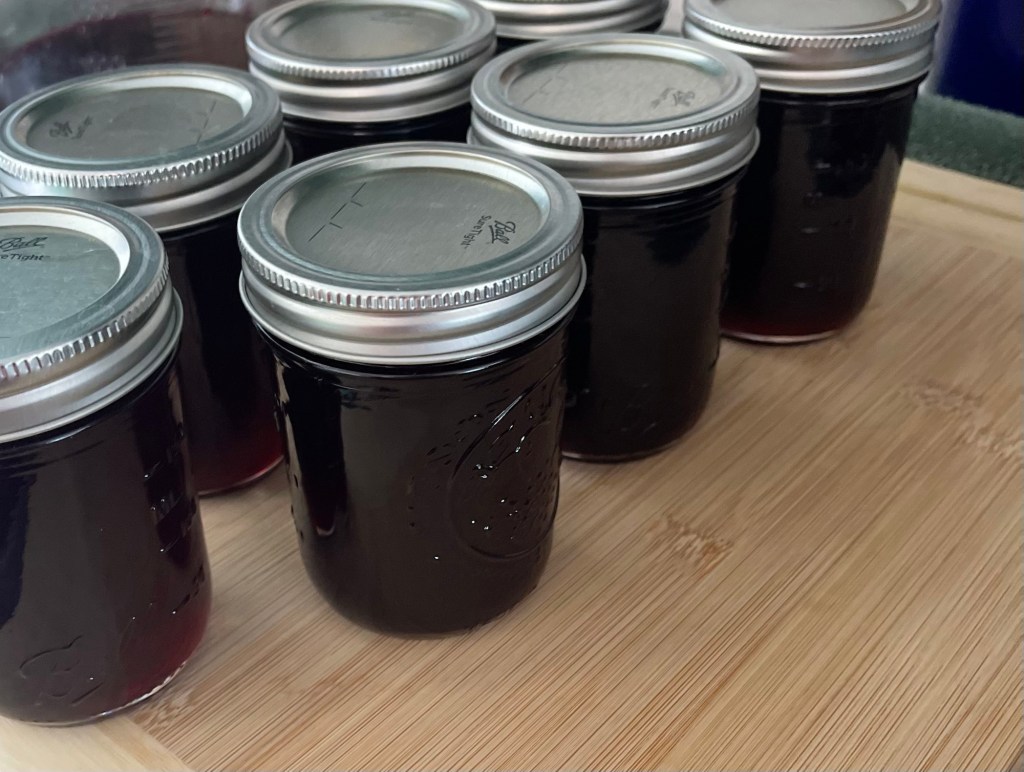
Now a bit of transparency: grape jelly isn’t my favorite. I have always been fully in the strawberry jam camp, but this jelly is different. This jelly is special, because we saw the entire process, from vine to table, so to speak. I’m not stranger to canning, in fact I probably put up 4-6 batches of jams every year. Grape jelly, however, is new to me.
I found a recipe written by Betty Taylor in a newspaper, the New Braunfels Herald-Zeitung. Here’s what I did:
I divided my grapes into two piles, each one roughly 4 pounds and soaked them in clean, cool water for a few hours. Then I used my hands to scoop 4 pounds or so into a dutch oven and I added one cup of water. I left all the stems and leaves that came with the grapes, since they would be strained out anyway. I cooked the grapes on medium heat for 20-30 minutes, smashed them a little with a potato masher, and then strained them into a clean bowl with both a colander and a fine mesh strainer. Doing this in two batches, I got six cups of grape juice. I probably could have squeezed them a bit more, but I was on the struggle bus with the kids this night and just did my best. After this, I stuck the juice in the fridge and came back to it the next day.
The next day I sterilized some jars and measured out four cups of juice. I set the rest aside to use as just plain grape juice concentrate. Then, I put a small ceramic plate in the freezer. I mixed in my powdered pectin and stirred, letting that cup to a boil. Then, I added six cups of sugar and let it come back to a boil. I stir frequently during this process. After about a minute of heavy boiling, I took out my very cold freezer plate and dribbled some jelly onto it. After 30 seconds, I pushed my finger through the drop to see if the jelly was set. If it wasn’t set to my liking, I put the plate back into the freezer and cooked the jelly for two more minutes, then tried the plate test again. Once I was happy with the set, I ladled the jelly into the jars, leaving 1/4 inch at the top. Then I carefully wiped the rims of the jars with a clean, damp cloth and put the lids and rings on the jars, tightening just to finger-tight. Next, I placed the jars into boiling water for 10 minutes (because of my altitude. When I lived in Colorado I had to boil my jams and jellies much, much longer.) Finally, I took the jars out of the water and set them on a dish towel on my counter. The jars make a happy popping sound as each lid seals. There they sat overnight, and were ready to be stored, gifted, or eaten the next day.
Canning is becoming a bit of a lost skill, but it’s so important to know how to preserve fresh food for the times when it’s out of season. Not only is it more economical, I can control the ingredients. Even if you had to buy the jars brand new, a batch of jelly or jam would cost you less than $2 a jar. Obviously the cost decreases if you are refusing jars and only buying new lids.
This jelly is great, and I’ll definitely use the recipe again. Despite the mountain of sugar, the taste isn’t too sweet, and we have all enjoyed it.

 Cozy and Maple
Leave a comment