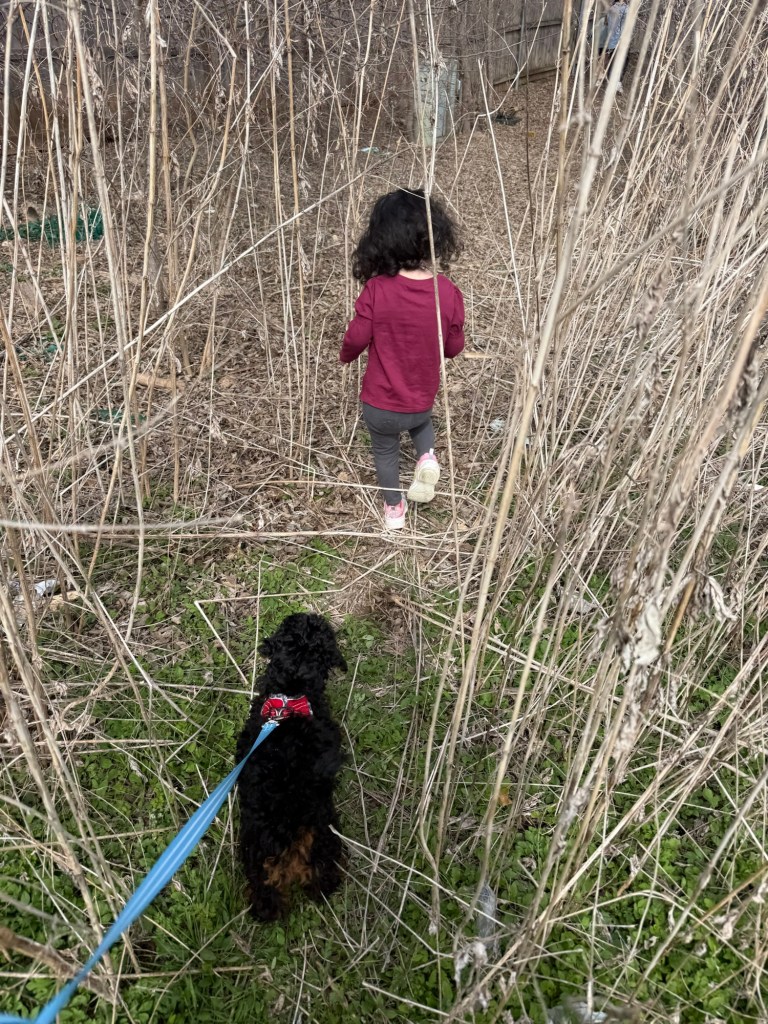
I cried today, in front of my kids. Having a puppy is far harder than I realized, and shes just plain loud sometimes. If you know me personally, you know me to be a bit on the introverted side, and I like our home to be really peaceful and joyful. A barking puppy clangs just wrong in my ears, and when she nips at my kids, the mama bear anger comes out and I wonder why I decided a puppy was a good idea. As with all hard things, time will help, and I do feel kind of silly calling puppy-hood a “hard thing” in the grand scheme of things, but here we are. Right now, as I type this, I have her leash looped on my wrist to keep her from harassing our elderly dog. And yes, shes laying at my feet crying sadly as the kids play in the next room, but as I told her, actions have consequences.
This brings me to another thing: resilience. If you spend any time reading parenting articles, listening to podcasts, or scrolling through social media, you’ve probably noticed that resilience is having a moment. Experts talk about it. Educators emphasize it. Mental health professionals stress its importance. Parents are all wondering how to cultivate it.
And for good reason.
We are raising children in a world that moves quickly, reacts loudly, and often removes friction whenever possible. Convenience is everywhere. Discomfort is something we try to eliminate. Obstacles are viewed as problems to solve immediately rather than experiences to work through.But resilience isn’t formed in a life engineered for constant comfort.
Psychologists often describe resilience as the ability to adapt well in the face of stress or adversity. But for children, it rarely begins with major adversity. It begins in small, ordinary moments:
When the hike is longer than expected. When the weather shifts unexpectedly. When the fort collapses and has to be rebuilt. When their little sister messes up their clean room. When the creek crossing requires a second attempt. Even when your mom makes yogurt bowls for breakfast and you loath yogurt. These moments may seem insignificant, but they are practice.
Practice for disappointment, problem-solving, and perseverance. When we shield children from every frustration, we unintentionally send the message that discomfort is dangerous. But when we allow them to experience small struggles (while we remain steady and supportive) we communicate something far more powerful: “You can handle this. And I’m here.”
That combination, challenge plus connection, is what builds resilient kids.
More musing: nature is one of the safest places to practice.
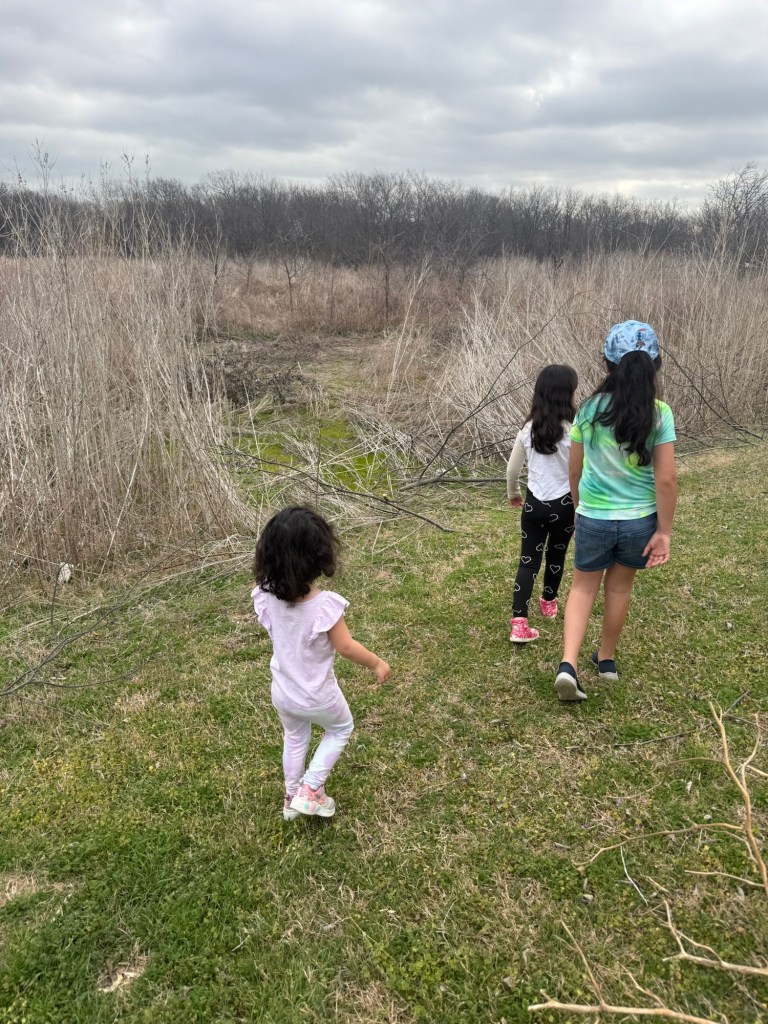
Nature has a quiet way of building resilience. Outside, things are rarely perfectly comfortable, and I don’t have rough-and-tumble kids. It’s too warm or too windy. The ground is uneven. There are mosquitoes that did not ask permission to join us. Sometimes the trail is muddier than expected. Sometimes the creek we hoped to see is completely dry.
And yet, we go anyway.
Learning to navigate minor discomfort teaches children something far more valuable than constant ease ever could: they discover that they can adapt. They can adjust their footing and try a different path. They can solve the problem in front of them without someone smoothing it over first.
That kind of resilience isn’t formed in climate-controlled environments where everything is predictable and tidy. It grows slowly, almost invisibly, in moments when a shoe gets stuck in the mud and they have to figure out how to pull it free. It develops when the wind is stronger than they expected but they keep walking. It deepens when they’re tired, but the car is still a quarter mile away. Discomfort, in small and safe doses, becomes a teacher. My kids learn that frustration doesn’t mean failure. That inconvenience doesn’t mean catastrophe and not everything has to be optimized to be enjoyed.
Perhaps most importantly, they learn that they are capable.
When we allow our kids to experience the manageable challenges of the outdoors, we are instinctively telling them, “You can handle this.” And every muddy step reinforces that message.
This leads me to my final musing (muse? thought?): t’s easy to talk about resilience when we’re discussing our kids. It feels practical, actionable, and necessary.
It’s harder (and far more humbling) to ask whether we are resilient ourselves.
Unfortunately, or maybe fortunately, children learn far more from what we model than what we instruct.
As a Christian adults, resilience isn’t about pretending everything is fineand it isn’t about emotional suppression or smiling through pain. Biblical resilience is rooted in trust. It’s the steady confidence that God is present, even when circumstances are not comfortable, convenient, or clear.
And that kind of resilience is built intentionally. In traffic, at bedtime, with finances, during arguments with your spouse, when dinner burns, when your clothes are too tight, when the dog is barking, when someone stepped in dog poop, when the dog nips your kids, when the dog is barking, when the dog is barking, when the dog is…ok, yes, the dog is a sore spot for me right now. When we (I) respond to these smaller pressures with patience instead of panic or anger, we are training our souls. Scripture reminds me that endurance produces character. Character doesn’t appear overnight; it forms through repetition.
Christian resilience develops when we regularly return to what is true: that God is sovereign, that He is good, that suffering is not wasted, and that our hope is not tied to temporary comfort.
That doesn’t mean we ignore grief or frustration. It means we refuse to let them have the final word.
By the way, the puppy has fallen asleep at my feet and we have enjoyed twenty minutes of peace.




 Cozy and Maple
Leave a comment