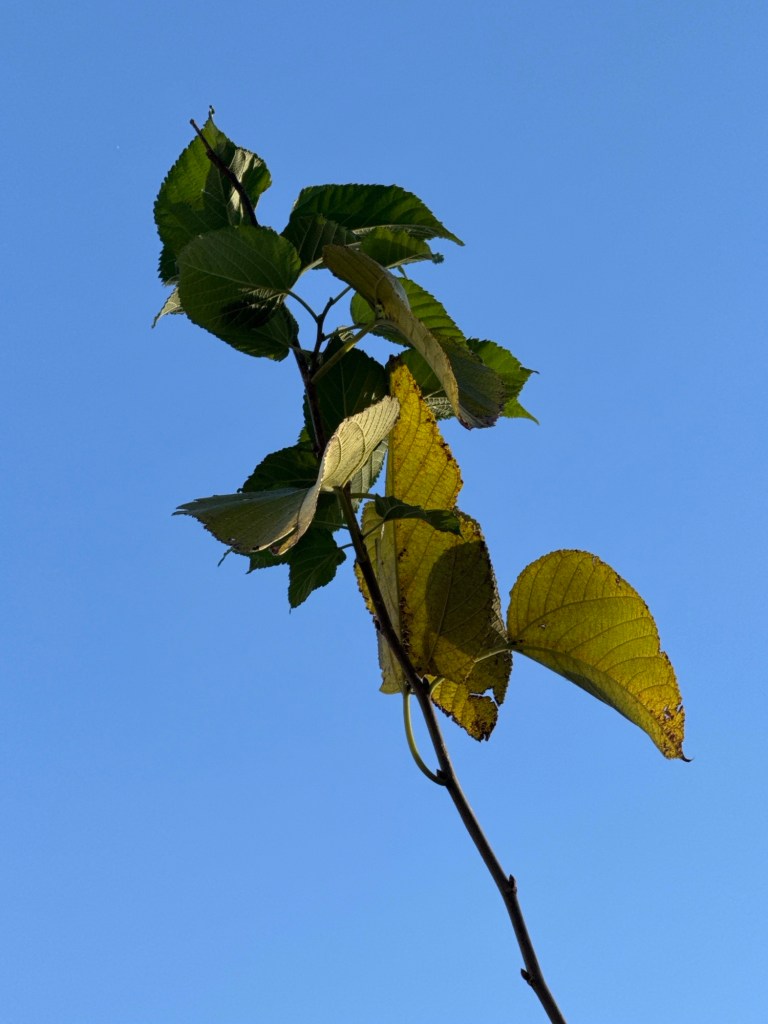
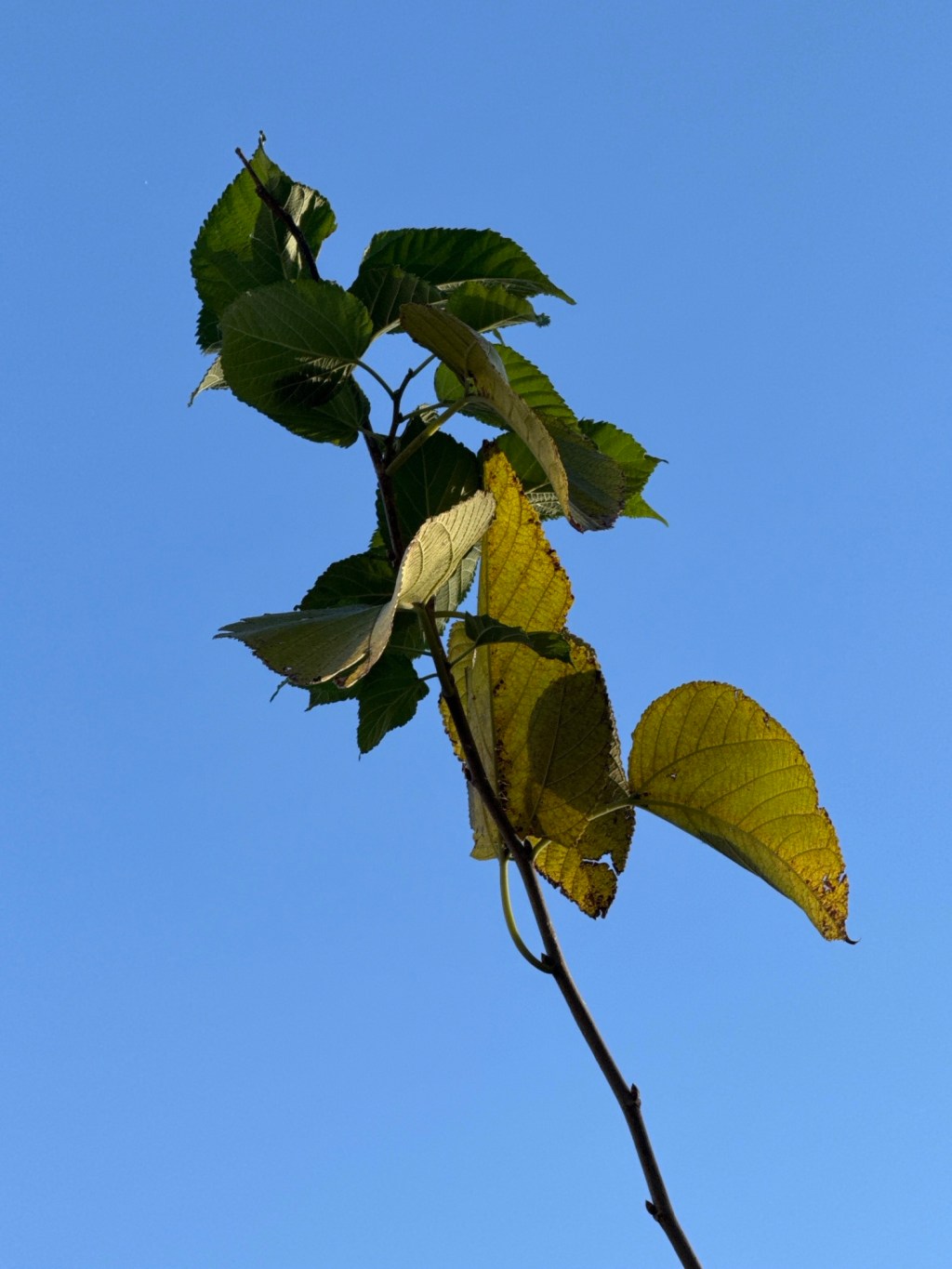
This morning, I was identifying trees with my kids for homeschool science when I came across a volunteer mulberry tree along the back fence of our property, in the swamp we back up to.
We were looking at leaves, comparing shapes, noticing the little details that help us tell one tree from another: elm, hackberry, apple, false willow, and mulberry. These sorts of ordinary mornings make up so much of homeschooling: a little fresh air, a little science, and a mom making much over ordinary things.
The mulberry was easy enough to recognize once I started looking at its leaves. They were heart-shaped, with those lovely uneven edges, and I found myself thinking how fitting it was for a tree to have leaves shaped like fluttery hearts. But then I remembered something else about this particular tree: I’ve never seen it with any mulberries. At first I thought I must have misidentified it, but after more careful study, it was confirmed: a no-berry berry-tree.
The thought struck me as unexpectedly sad. Here is a mulberry tree that appeared entirely on its own, a volunteer growing wherever the wind or a bird happened to leave it. Nobody planned for it. Nobody went to a nursery and selected it, imagining the fruit it might someday produce. It simply arrived and began growing, and yet, it doesn’t bear any fruit.
I know there are perfectly reasonable botanical explanations for this. Some mulberry trees are male and don’t produce fruit. Others may be too young, or may not have the right conditions. There is probably a sensible answer to the mystery of this particular tree, but I can’t help finding it a little poetic.
A mulberry tree without mulberries. A tree that has grown into exactly what it is, with its heart-shaped leaves and its branches reaching toward the sky, but without the one thing most of us would think to look for.
I wonder how often we do this with living things. We look at a tree and ask whether it produces fruit. We look at a person and wonder what they have accomplished. We measure the garden by its harvest and the year by what we managed to get done. We want evidence that all this growing has amounted to something. But, is the growing itself something to notice?
Perhaps this little mulberry provides a bit of shade over the bench my husband built me for my 35th birthday. Perhaps birds rest in its branches, or caterpillars nibble at its leaves. Perhaps it will grow for decades, quietly participating in the life of the little patch of earth where it happened to take root. It may never give anyone a single mulberry, and it will still have been a tree worth having.
I don’t know why I find that so moving. Maybe it’s because I have children, and so much of motherhood is watching something grow without knowing exactly what it will become. Maybe it’s because homeschooling has taught me to pay attention to small things I might otherwise hurry past, or maybe it’s simply that, every now and then, an ordinary thing catches the light just right and feels like a parable.
We set out this morning to learn how to identify trees. We looked at leaf shapes and edges, compared one tree to another, and practiced putting names to the living things around us, and I found myself thinking about a tree that doesn’t seem to do the thing it’s supposed to do.
I hope it keeps growing.
I hope its heart-shaped leaves catch the sunlight next spring. I hope birds find shelter in its branches. I hope that, whether or not it ever produces fruit, it gets to be a perfectly good tree. Most of all, I hope the next time I’m tempted to measure myself by what I produce, I think of it. Sometimes it’s enough to take root and reach for the light.


Leave a Reply